Nobody publishes a price list for freight, and there is a reason for that. Ocean and air rates move week to week, and two shipments of the same weight can cost very different amounts depending on the space they take, where they are going and what has to happen to them on the way. What does not change is how the price is built. Once you understand the structure, you can read any quote and see whether it is cheap or just incomplete.
The three ways cargo is priced
- Shared container, priced per cubic meter. LCL is billed per CBM or per ton, whichever is higher, so light bulky cargo is charged on the space it fills.
- Full container, priced per container. FCL is one price for the box whether it is full or not, which is why the cost per cubic meter drops as you fill it.
- Air freight, priced on chargeable weight. The airline compares actual weight with volumetric weight and charges the higher of the two. Furniture almost never flies.
The switch between shared and full container usually happens somewhere around fifteen cubic meters. We worked through that comparison in LCL or FCL, which one is actually cheaper.
Work out your volume before you ask for a price
Multiply length by width by height in meters, for the packed carton or crate rather than the product. A box of sixty by forty by fifty centimeters is 0.6 x 0.4 x 0.5, which is 0.12 cubic meters. Ten of those is 1.2. Do this before you contact anyone, because volume is the single number that decides which pricing model applies to you, and a quote given without it is a guess.
Measure the finished packing, not the goods. Crating adds real volume, and that volume is what you pay for.
The costs sitting around the freight
The ocean or air rate is rarely more than half of what you pay. The rest sits at the two ends, and this is where quotes differ most.
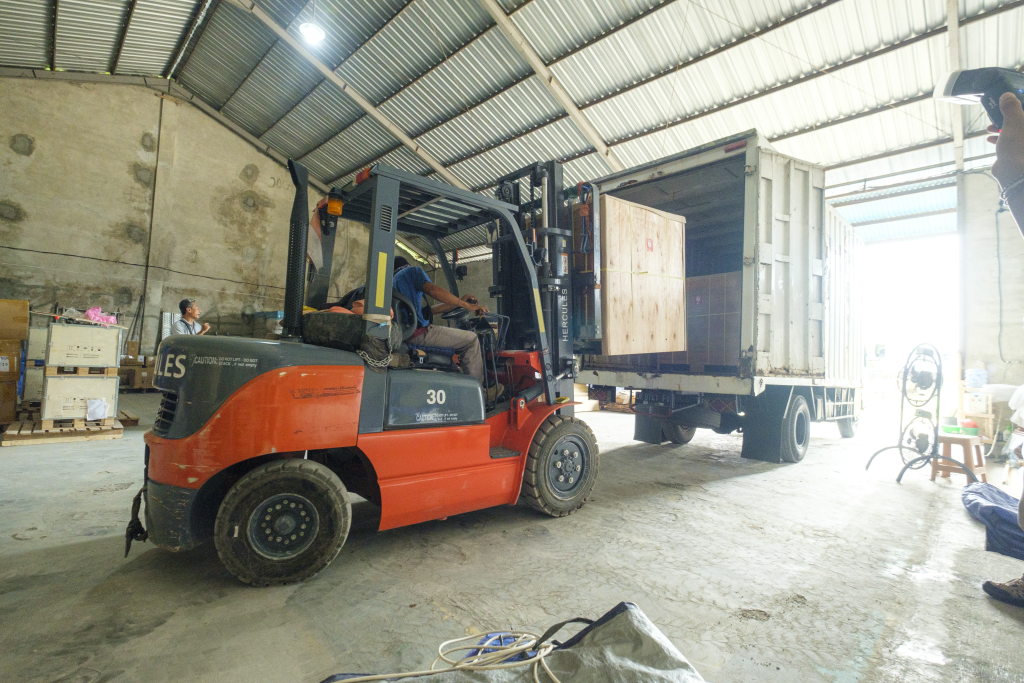
- At origin. Pickup in Bali, export packing and crating, fumigation or heat treatment for wooden packaging, document fees, export clearance, and terminal handling.
- The freight itself. The sea or air rate for the lane, plus fuel and carrier surcharges that move separately from the base rate.
- At destination. Terminal handling, customs clearance, import duty and taxes, and final delivery to the door.
Which of those are yours and which are your buyer’s is decided by the Incoterm you agree, not by the forwarder. Our guide to Incoterms sets out the common ones.

Why the number changes month to month
- Season. Rates rise before Christmas and Chinese New Year, when space is short.
- Space and routing. Most containers from Bali connect through Surabaya, Jakarta or Singapore, so the number of transhipments affects both price and transit time.
- Fuel and currency. Surcharges follow fuel prices, and international freight is quoted in dollars, so the rupiah figure moves with the exchange rate.
This is why a quote has a validity date on it. A rate from two months ago is not a price, it is a memory.
Domestic shipping is priced differently
Within Indonesia, cargo is usually charged per kilogram or per cubic meter with a minimum charge, and the destination matters more than the distance. A remote island with one weekly sailing can cost more than a larger city that is further away. For the Bali to Jakarta lane specifically, we published current container cost estimates.
How to compare two quotes properly
- Ask what is not included. The gap between two prices is usually a charge one of them left out.
- Check whether destination charges and delivery are inside the number or waiting at the other end.
- Compare transit times on the same routing. A cheaper quote with two extra transhipments is a different product.
- Check the validity date, and whether the rate is subject to space confirmation.
- Ask who handles customs, because a handover to another agent adds both time and margin.

Where money is actually saved
Not by squeezing the freight rate. It is saved by packing efficiently so you buy less space, by consolidating several small orders into one shipment, by booking before the peak rather than during it, by using the right HS code so your buyer pays the correct duty, and by getting the documents right the first time. A shipment held at the port for a missing certificate costs more in storage than any rate negotiation will save you.
Getting a real number for your shipment
Send us the packed dimensions, the weight, what the goods are and where they are going, and we will quote the full cost rather than the freight alone, so you can see every charge before you commit. Quotes go out within 24 hours on working days. If you are weighing up providers first, our guide to the best cargo company in Bali covers what to check, and the short answers are on our FAQ page.